
Eight Directional Theory of Combat
One of the basic concepts in many martial arts is the use of direct and indirect angles in the directions of attack and defense. We have the obvious front, back, left, and right, and the less obvious diagonal directions between them. It is generally considered superior to attack from oblique angles as opposed to coming directly in. This applies both to the horizontal plane with its eight directions (forward, back, left, right, and diagonals) as well as to the vertical plane with its eight directions (up, down, left, right, and diagonals). We can think of our upper and lower halves as working independently, where our lower half maneuvers on the horizontal plane with foot work, and our upper half operates on the vertical plane with blocking, striking, redirecting and other martial applications. When an attack comes from the front direction we have essentially two options, meet it head on with force against force to hold our ground, or step to one of the seven directions not currently occupied by the opponent. Perhaps the easiest way to do this is to step straight back away from the incoming force, and this is a very common first instinct. However, this is often one of the worst options from a tactical maneuver viewpoint in that it does not remove you from the line of incoming force or change the angle of engagement. Ideally, a tactical maneuver should evade the incoming attack while seeking to find a superior position in the same movement. From looking at it through this lens, the back left and back right directions are better than straight back as they move you slightly off the line of attack and give you an oblique angle on your opponent. Stepping directly to the right and left can be even stronger provided you turn back enough to face the opponent, and the front left and front right directions are the best while most difficult to achieve as they put you behind the opponent to the rear obliques and require the most turning back. The strongest direction to attack is your own front, then the front right and front left are somewhat less effective, and so on with the most difficult being directly behind you. Other than just dominating the centerline forward direction, the arms can block and strike up and down, left and right, and to the diagonals. In this aspect once again the diagonals tend to be the superior angles of attack and defense. There is an important point in using tactical maneuver that either foot can step in any of the eight directions, so you want to avoid being double weighted and always be ready to step with one of your feet or the other.
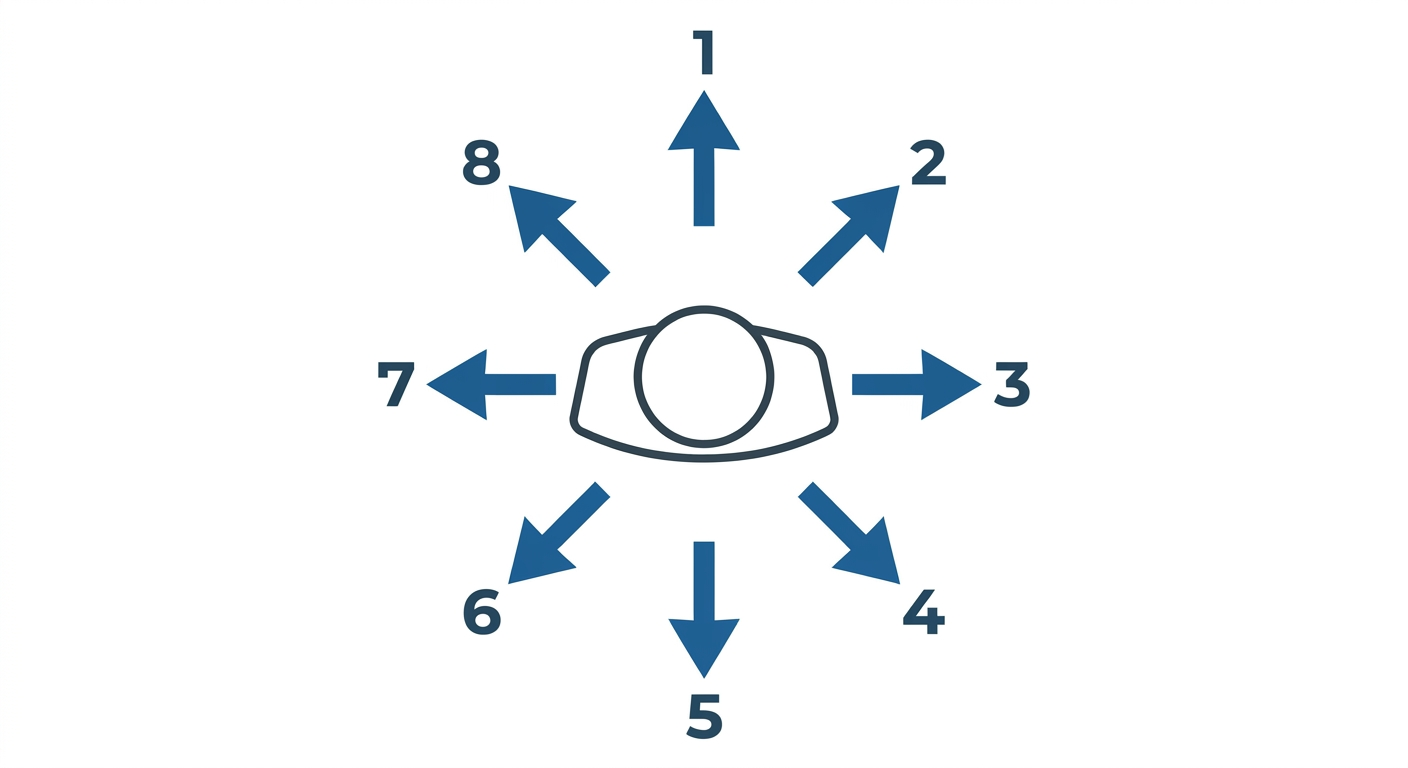
The eight horizontal directions of movement.
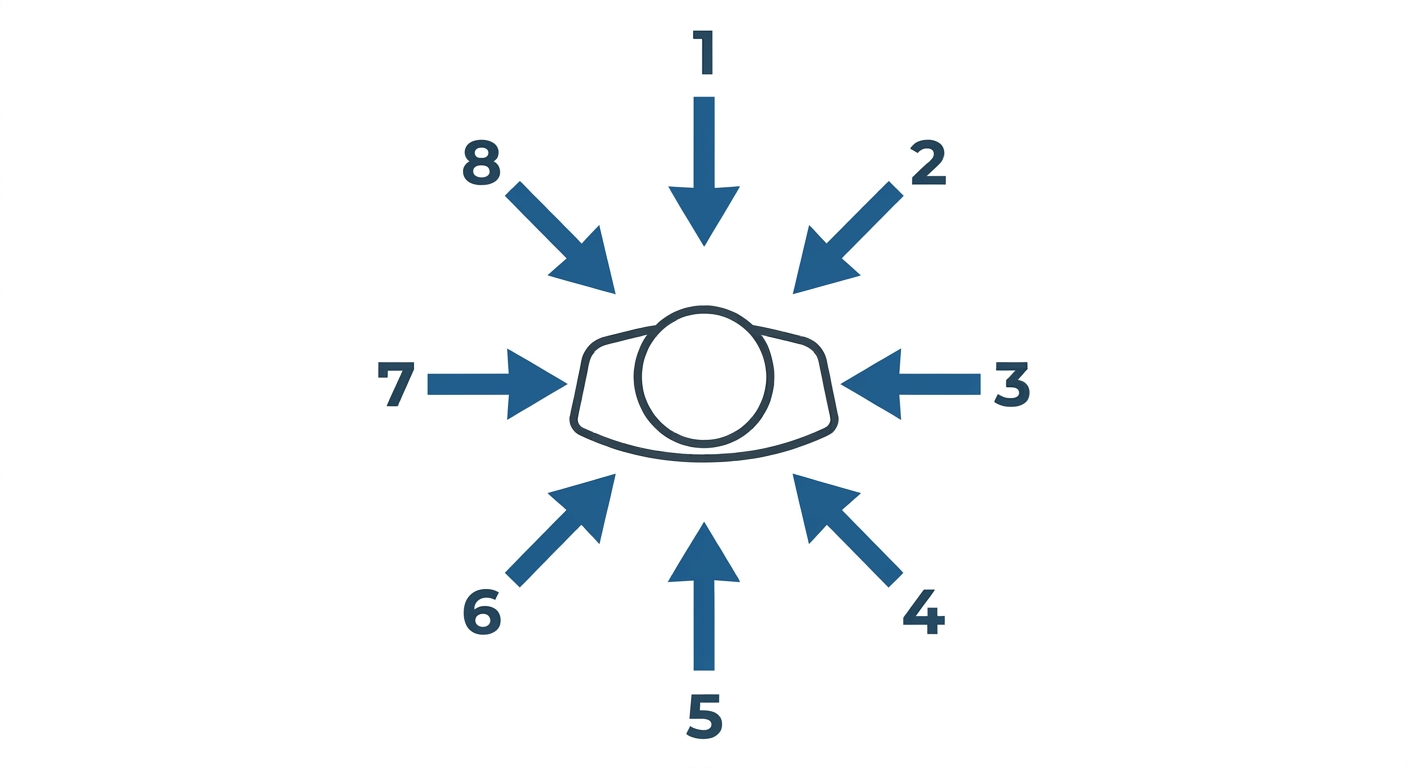
The eight directions of attack and defense.
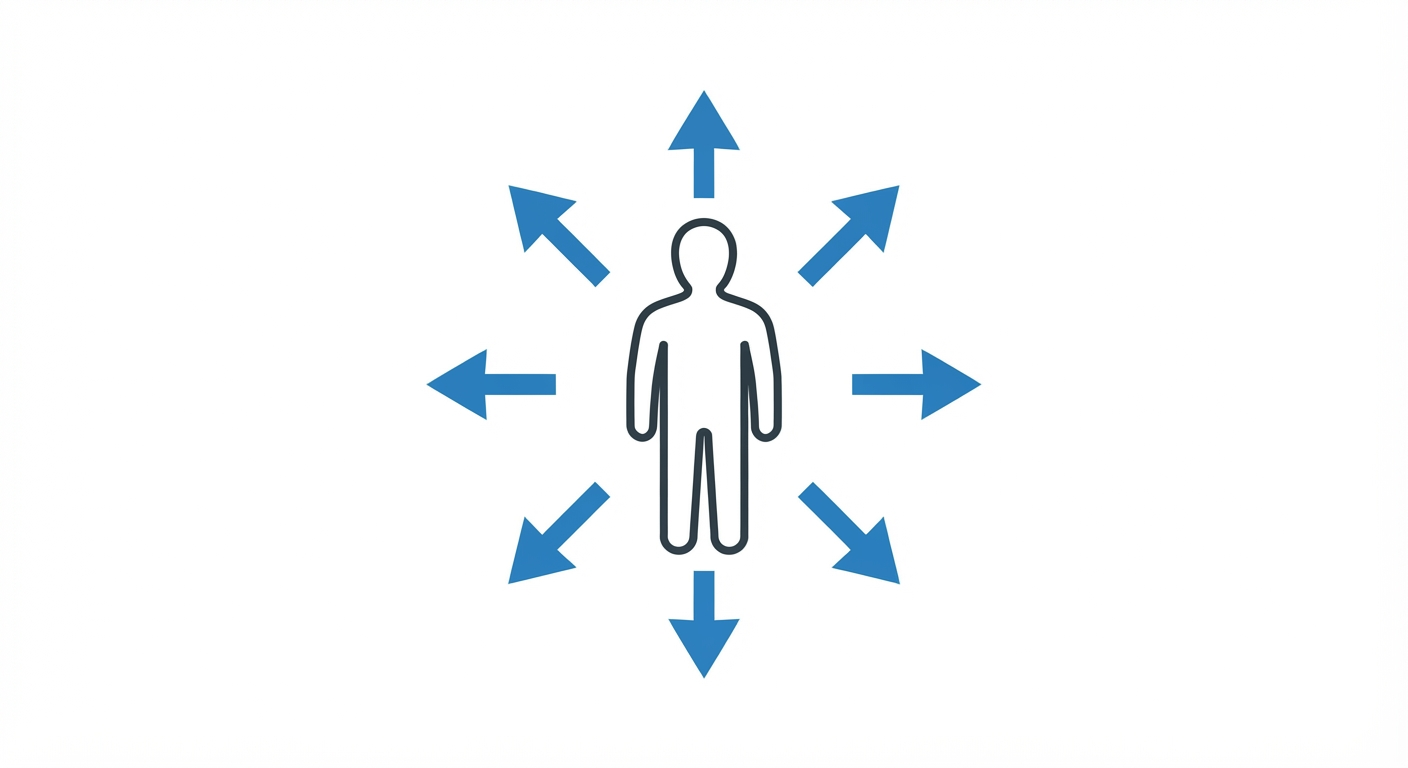
The vertical eight directions of up, down, left, right, and the diagonals.
In this numbering system 1, 3, 5, and 7 represent the straight directions while 2, 4, 6, and 8 are the diagonals.
The strongest position you can have is your 1 facing the opponent’s 5 placing you directly behind them. Then the rear diagonals 4 and 6 are the next strongest followed by the left and right at 3 and 7, the front diagonals at 2 and 8, and the weakest position being your 1 facing the opponent’s 1 head on with force against force directly.
